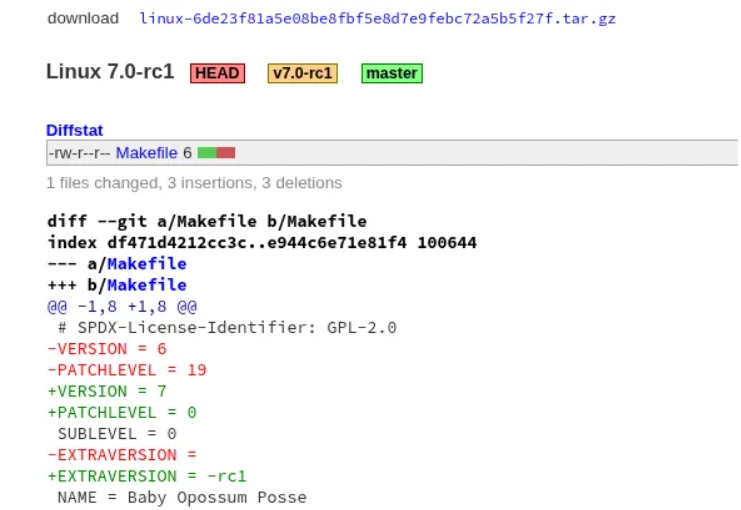
The Linux 7.0-rc1 system version was officially released yesterday, including numerous changes and new features.
In addition to changing the major version number, the Linux 7.0 kernel is also expected to become the default kernel for systems such as Ubuntu 26.04 LTS and Fedora 44.
Linux 7.0 brings more compatibility with Intel Nova Lake and Diamond Rapids processors , as well as more compatibility with AMD Zen 6 processors, and a wealth of new hardware driver support—including upstream support for non-AMD/Intel platforms such as the Qualcomm Snapdragon X2. On the graphics front, AMD also provides new graphics hardware support for upcoming devices.
It was learned that Linux 7.0 also brings some file system improvements, Apple USB Type-C PHY support, various performance optimizations, continued improvements to laptop drivers, multi-threaded SPI, Octal DTR support for SPI NAND, more sensor monitoring on ASUS motherboards, non-blocking timestamps, standardized general-purpose I/O error reporting, and officially ends Rust experimentation, confirming that Rust programming language support will be a long-term feature.
In terms of performance, Linux 7.0-rc1 has several performance improvements, including better PostgreSQL performance on AMD EPYC, better sequential read performance of exFAT, various F2FS file system enhancements, memory management optimizations, improved concurrent direct I/O writes with EXT4, automatic mode of Intel TSX enabled by default, improved scheduler performance and scalability, and large pages in Nouveau to help NVK performance.