
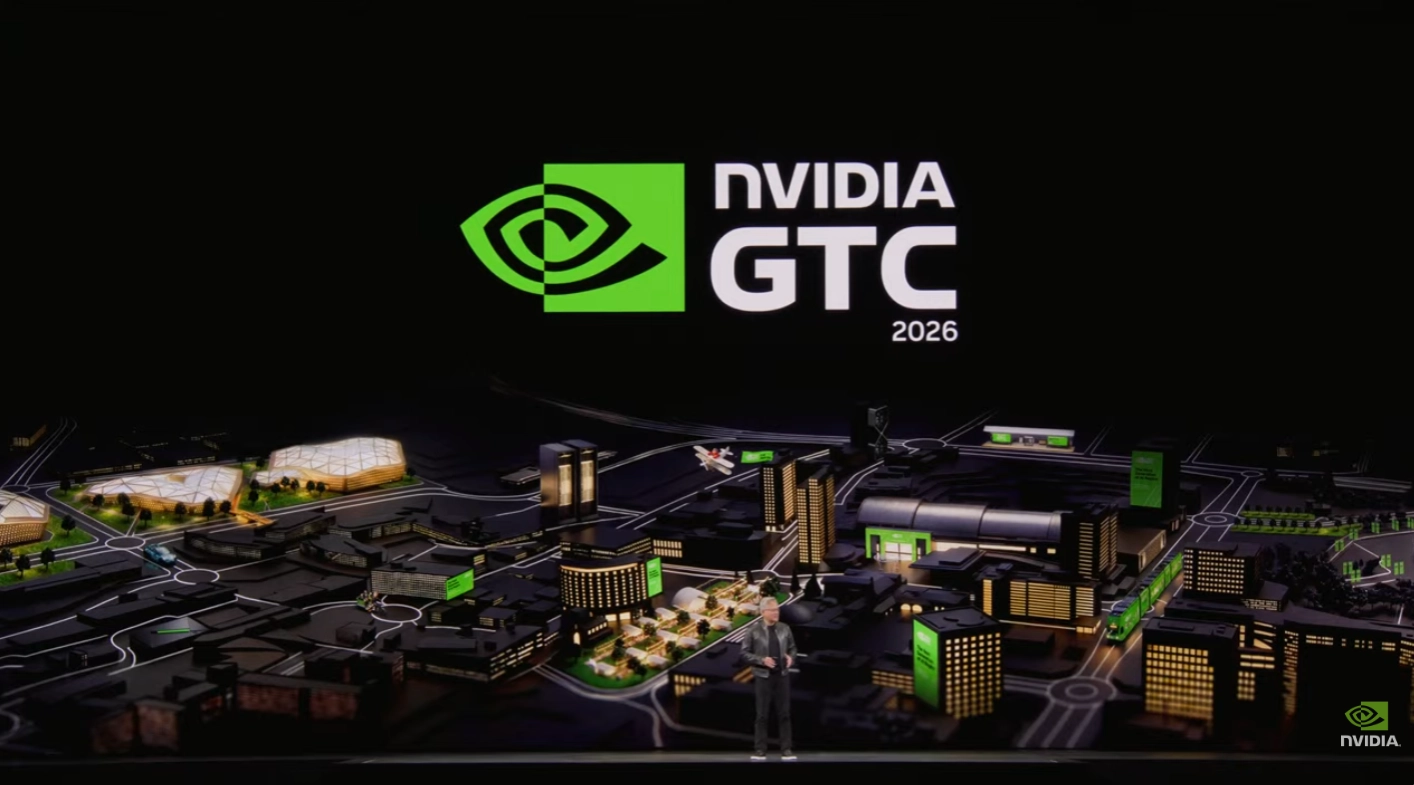
At the GPU Technology Conference (GTC) 2026 held on Monday (March 16), NVIDIA CEO Jensen Huang showcased DLSS 5 super-resolution technology in his keynote address and announced that the technology will be available this fall.
Huang Renxun stated:
Twenty-five years after NVIDIA invented programmable shaders, we are redefining computer graphics once again. DLSS 5 is a GPT moment for graphics, blending handcrafted rendering with generative artificial intelligence to achieve a giant leap in visual realism while maintaining the control artists need for creative expression.
Jensen Huang stated that DLSS 5 represents the most disruptive breakthrough in computer graphics since the advent of real-time ray tracing technology in 2018. The core of DLSS 5 lies in the introduction of a completely new real-time neural rendering model, which can fundamentally break down the barriers between traditional rendering and the real physical world, helping game developers achieve photorealistic visuals in their works that were previously only possible with Hollywood film special effects.
Jensen Huang emphasized that DLSS 5 is not only a redefinition of computer graphics, but also a “GPT moment” for the graphics field. Check relevant images below:
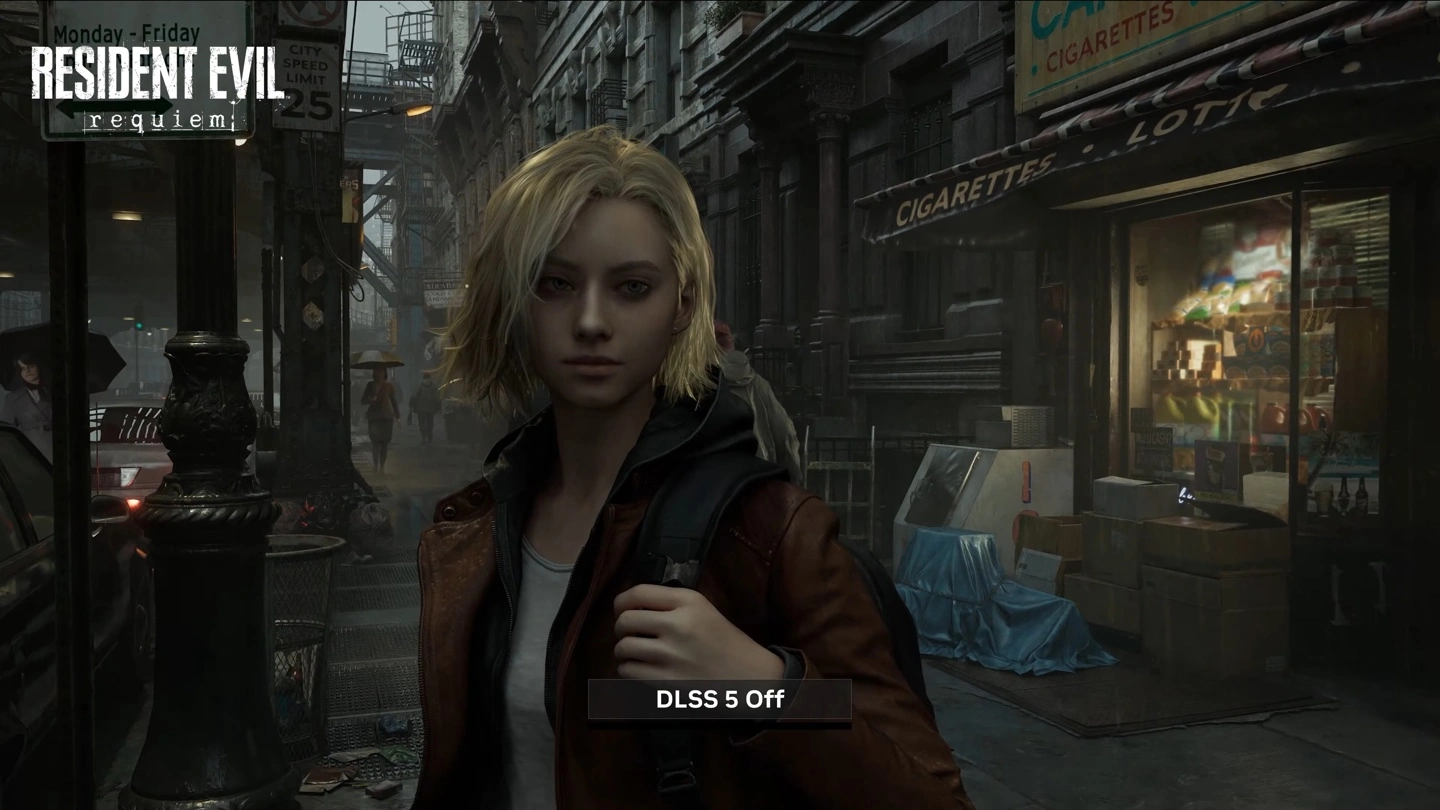
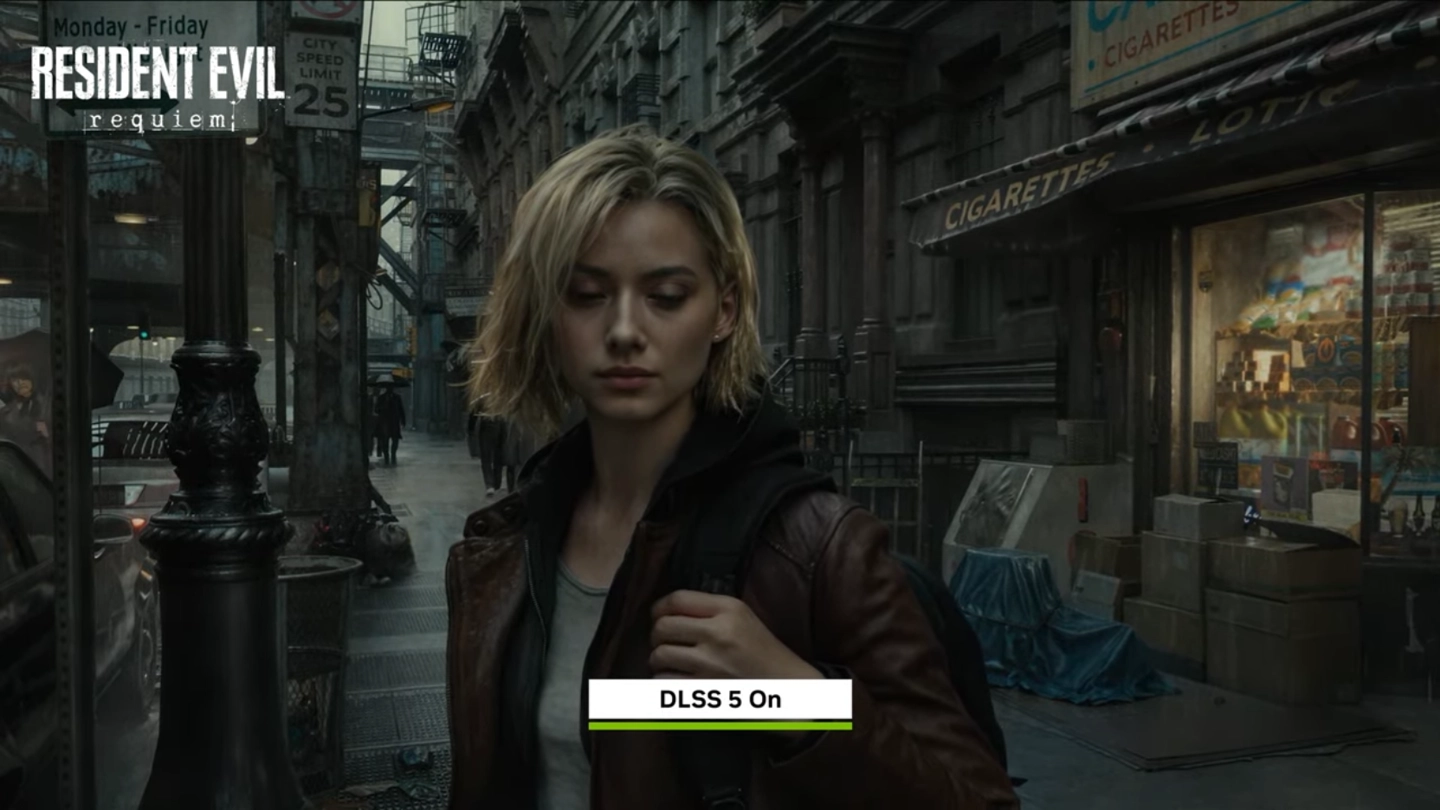






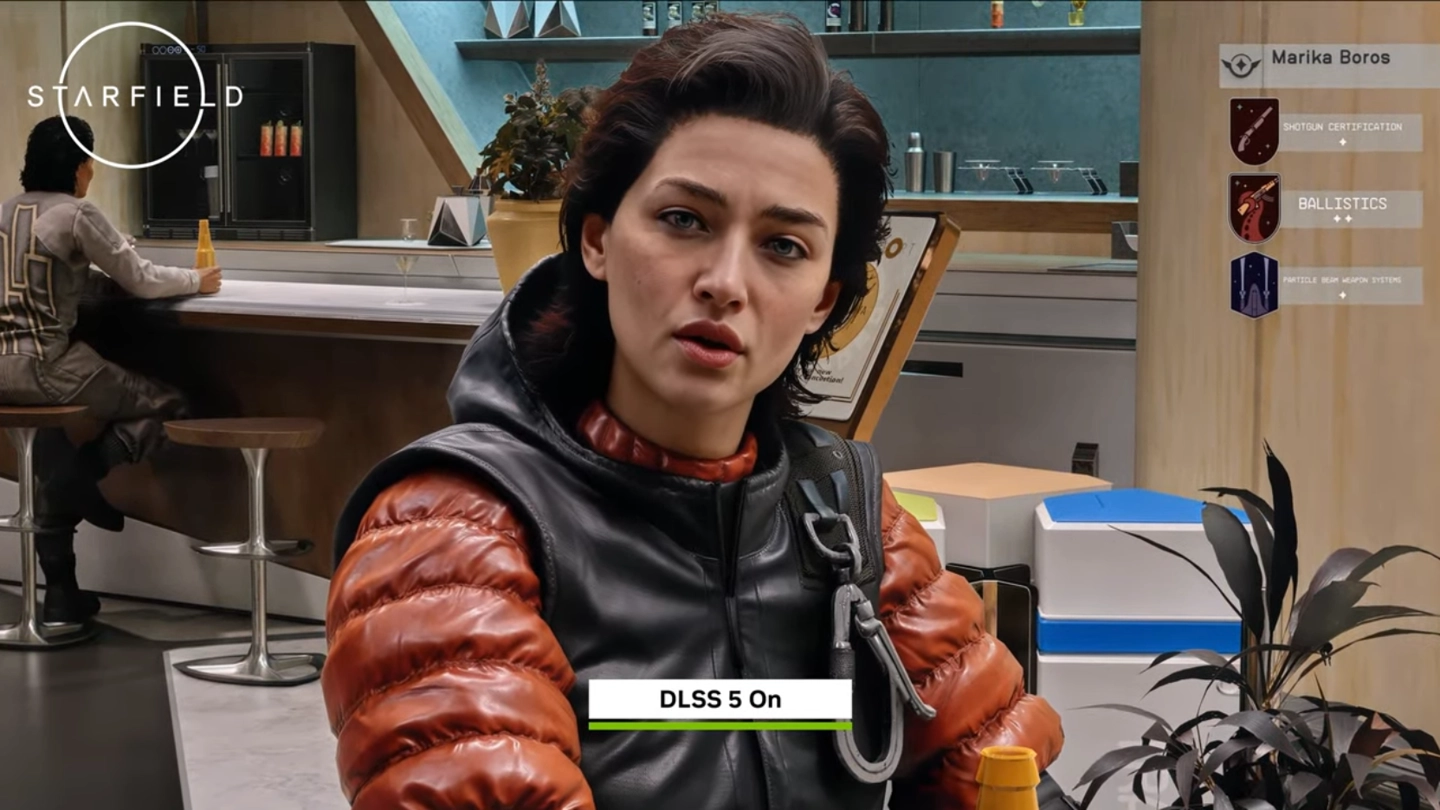
This technology cleverly combines traditional hand-rendered rendering with cutting-edge generative AI. In actual operation, DLSS 5 extracts the color and motion vectors of each frame of the game as input data, and then uses AI models to inject realistic lighting and materials into the scene in real time. Simultaneously, this technology can maintain real-time operation at resolutions up to 4K, ensuring players receive a smooth interactive experience.
While generative AI video models have historically been able to generate realistic footage, they often only operate offline, and the content generated lacks coherence and controllability. To address this pain point, NVIDIA has conducted end-to-end deep training on the DLSS 5 AI model.
Now, by analyzing a single game frame, AI can accurately understand complex scene semantics. Whether it’s the sheen of a character’s hair, the texture of cloth, or the subsurface scattering effect of light under the skin, AI can perfectly reproduce it. In addition, it can accurately handle complex ambient lighting such as front lighting, backlighting, or cloudy days, and maintain a high degree of consistency across different frames.
To ensure artists’ freedom of expression, DLSS 5 also provides developers with fine-grained control over intensity, color grading, and masking. This technology has already garnered unprecedented support from the industry. Top global game developers, including Bethesda, Capcom, Ubisoft, Tencent, and NetEase, have all announced their adoption of the technology.
This fall, players will be able to experience the visual feast brought by this revolutionary technology in many major games such as Starfield, Assassin’s Creed: Shadow, and Resident Evil: Requiem.