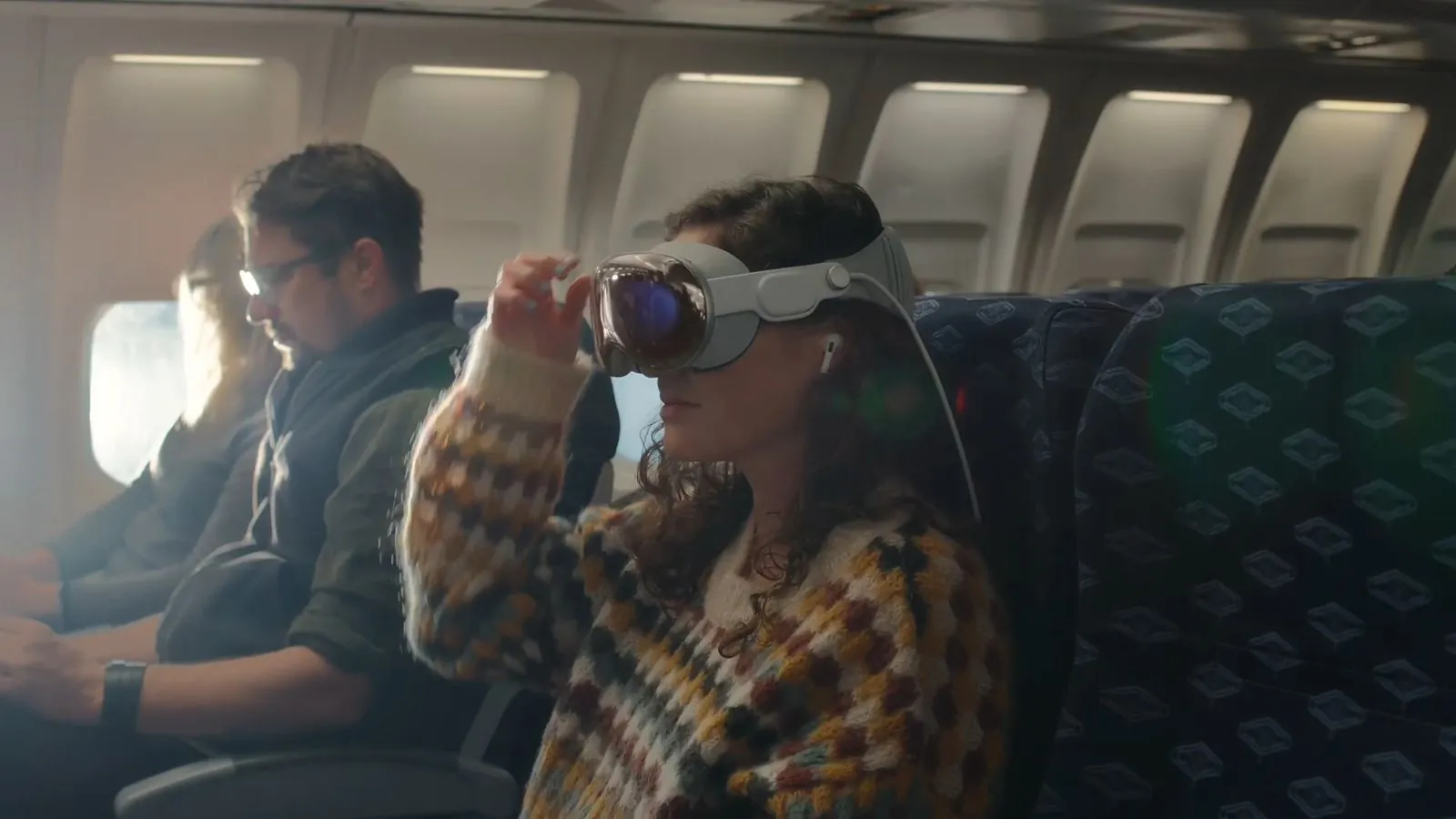
Tech media outlet Appleinsider published a report yesterday (March 11) stating that one of the hot topics among American netizens recently is whether passengers can routinely wear the Apple Vision Pro headset during flights.
According to the report, the incident stemmed from a passenger being asked by flight attendants to remove their Apple Vision Pro device while on a Delta Air Lines flight. The passenger subsequently shared the experience online, emphasizing that they had not found any explicit airline policy prohibiting the use of the headset.
The topic quickly sparked heated discussions on platforms such as X and Reddit. Some netizens pointed out that flight attendants have the right to ask passengers to put away electronic devices that may affect safety guidelines; while others said that they had used the device successfully on flights without being interfered with.
The media outlet then reviewed the current terms of service of American Airlines, Delta Air Lines, United Airlines, and Southwest Airlines, and found that none of these major U.S. airlines explicitly mentioned or banned the Apple Vision Pro.
Current U.S. regulations for avionics equipment primarily target mobile phones and laptops, focusing on flight modes, lithium batteries, and device storage. According to the Federal Aviation Administration (FAA) benchmarks, airlines are permitted to allow passenger use of the devices as long as they determine that the devices will not interfere with navigation or communication systems.
However, the media outlet also pointed out that despite the lack of explicit bans, immersive headsets still pose real cabin safety hazards. Because spatial computing devices directly obstruct the user’s physical field of vision, this not only significantly reduces passengers’ environmental awareness but may also prevent them from receiving safety instructions from the crew or noticing emergency exits in a timely manner.
Furthermore, the Apple Vision Pro requires an external battery pack and cables, which conflicts with the safety logic that requires retracting large electronic devices during critical flight phases such as takeoff and landing.
While Apple has developed a “travel mode” specifically for the headset, suitable for use in vehicles such as airplanes and cars, this does not supersede the safety management authority of airlines. Regardless of whether the device complies with current electronic product licensing standards, the flight crew always retains the final say on the use of the device within the cabin.