
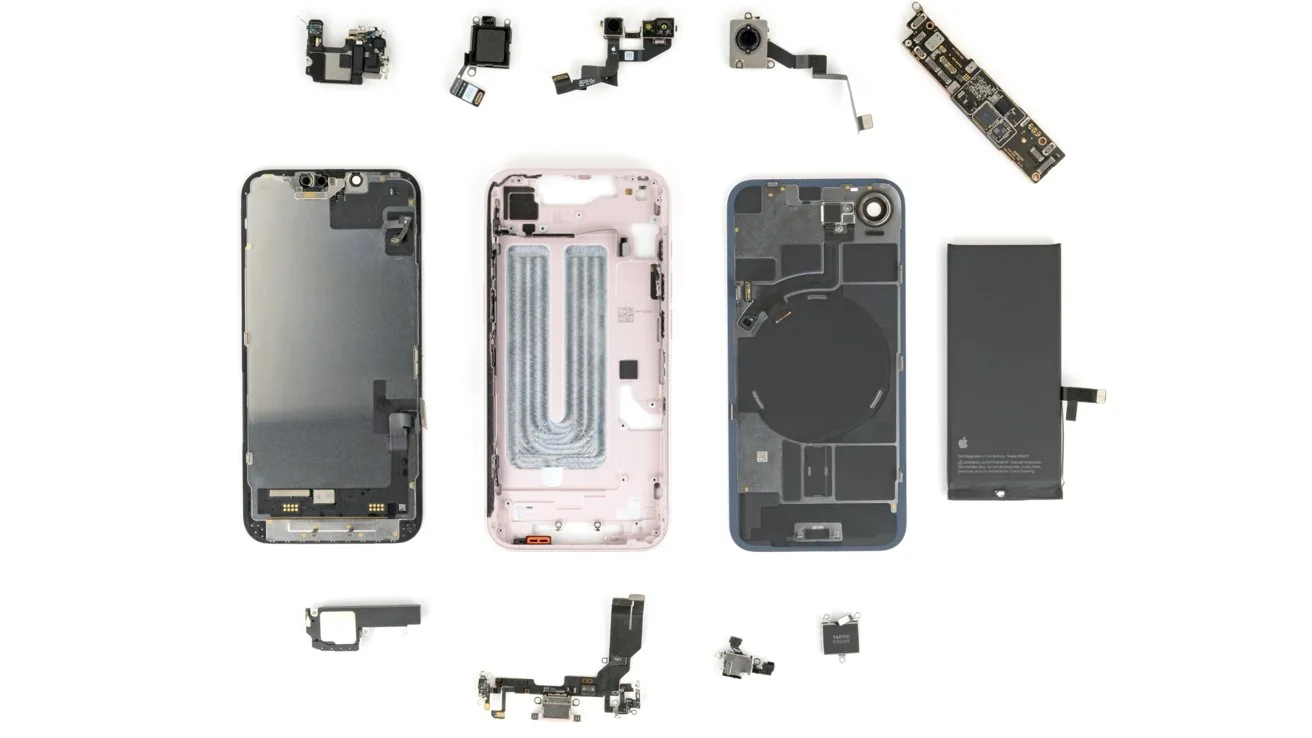
The international repair team iFixit released a teardown report on the Apple iPhone 17e yesterday (March 17). The results show that the internal structure of this model is almost a “replica” of the previous generation iPhone 16e.
The disassembly team first softened the adhesive on the back glass by heating it, then disconnected the ribbon cable responsible for wireless charging and flash power, successfully separating the camera body. During the disassembly process, the team used standard power-on debonding techniques to remove the battery and gradually removed the camera components and various screws.
After delving into the motherboard, iFixit confirmed that the device features the new A19 chip (replacing the previous A18) and uses Apple’s new C1X modem.
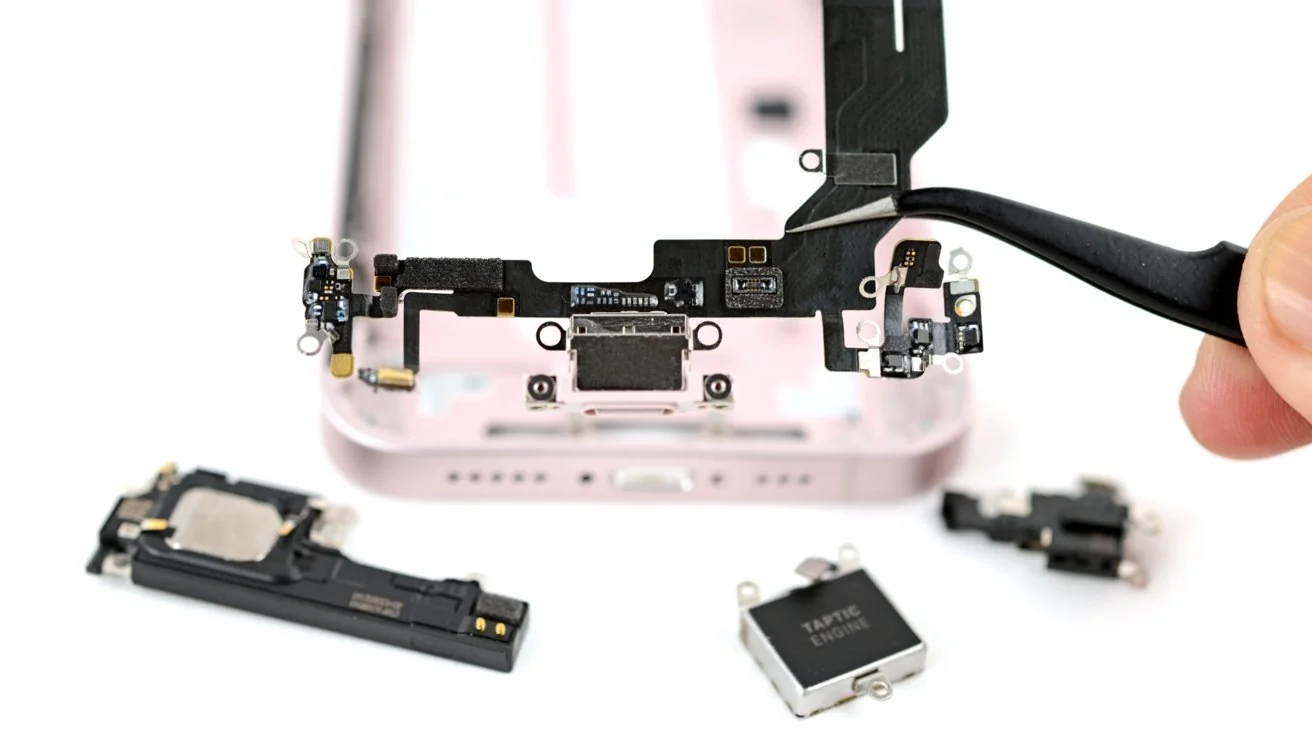
According to official data, this new baseband not only consumes less power but also boasts twice the speed of the previous model. Meanwhile, the MagSafe magnetic charging ring, compatible with the Qi2 standard, is integrated as scheduled on the inside of the back glass panel.
According to the teardown results, apart from the upgraded A19 chip and the addition of MagSafe magnetic support, most of the components in the iPhone 17e are found to be cross-generationally compatible with the iPhone 16e.
The disassembly team even successfully installed the iPhone 16e’s motherboard into the iPhone 17e ‘s casing, and the built-in “Repair Assistant” was able to successfully identify and configure most of the reassembled parts.
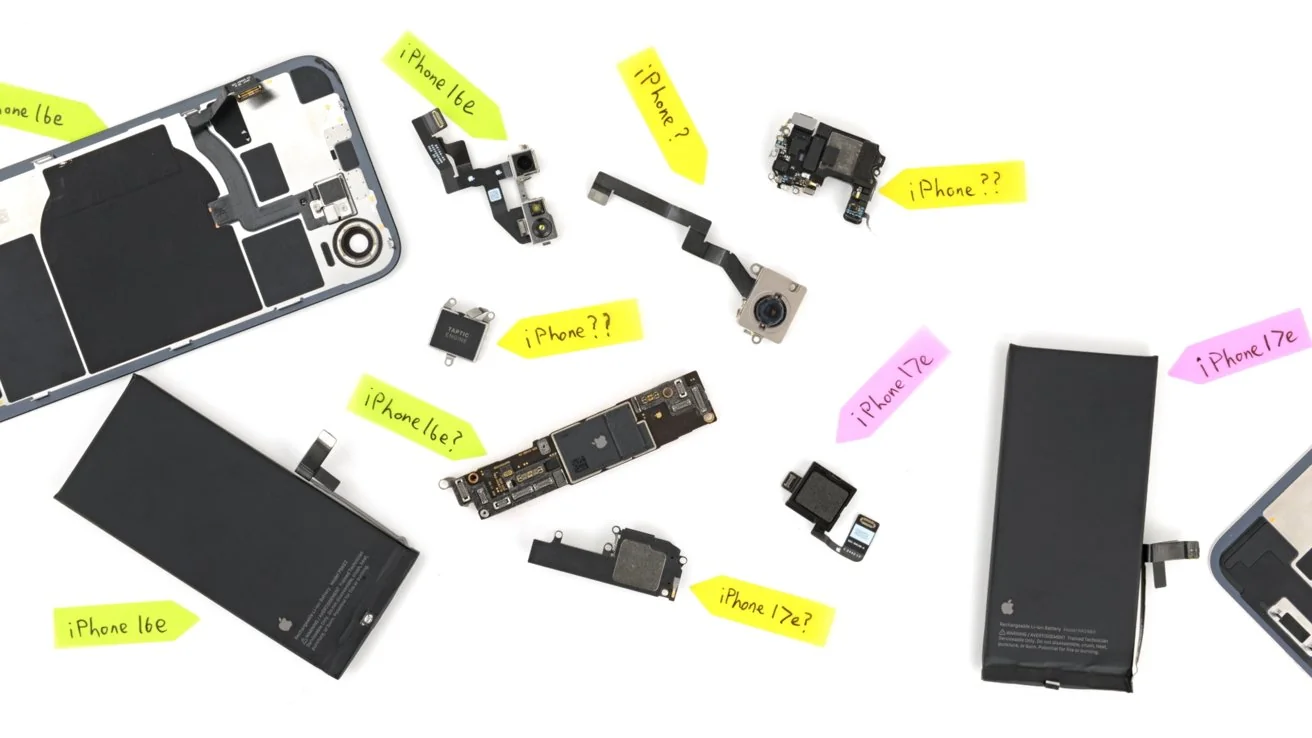
Furthermore, even though the iPhone 16e’s motherboard lacks software support for MagSafe (meaning no dedicated animation will appear during charging), this cross-generational combination can still successfully perform wireless charging. Whether it can reach the full 15W charging power requires further testing and confirmation.
Despite its high degree of interchangeability, this cross-generational porting solution has exceptions. After testers swapped the TrueDepth cameras on two phones, while basic photo-taking functions remained usable, Face ID functionality became completely disabled.