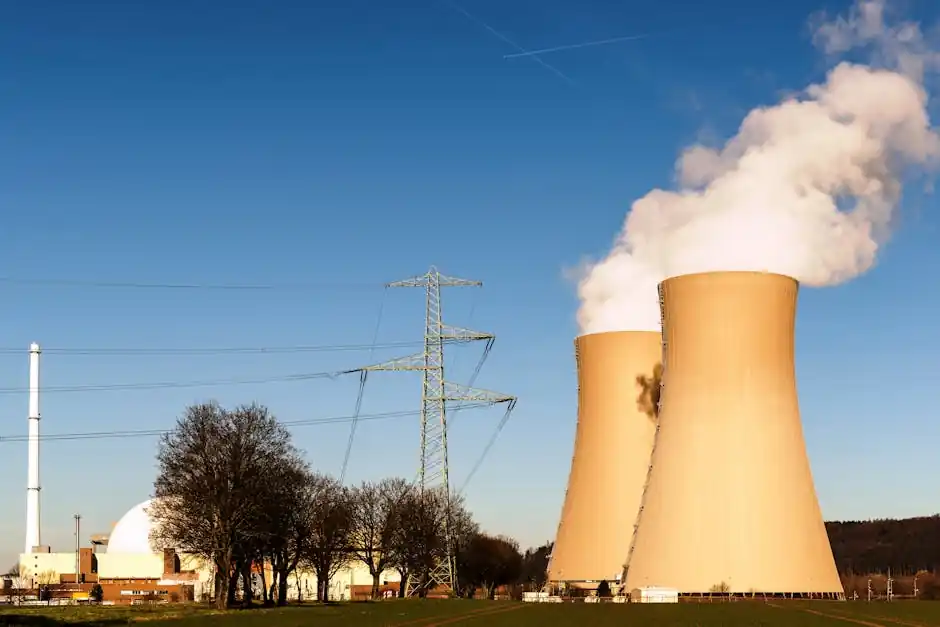
Tech giants are accelerating their involvement in the nuclear energy sector and changing the industry’s financing model. With the surge in electricity demand from AI data centers, these giants are providing financial support and clearer commercialization pathways to nuclear energy companies through long-term agreements.
Currently, several US companies are advancing small modular reactor (SMR) projects. It was learned from reports that these reactors are more flexible and advanced than traditional nuclear power plants, but due to financing difficulties and the risks associated with their first projects, they have not yet achieved commercial power generation.
The surge in electricity demand driven by AI is changing this landscape. Competition over power supplies for data centers is bringing nuclear energy back into the spotlight.
In terms of specific collaborations, Meta has agreed to support the development of two Terrapower units with a total generating capacity of up to 690MW, and has also reached an agreement with Oklo to advance a 1.2GW nuclear power project in Ohio.
Amazon is partnering with X-energy to plan to put more than 5GW of small modular reactors into operation in the United States by 2039; Google is partnering with Kairos Power with the goal of putting its first project into operation by 2030.
BMI senior analyst Shioly Dong pointed out that the aforementioned collaboration brings the financial strength of technology companies into the nuclear energy industry, which has historically relied primarily on regulated electricity pricing. The partnership will also provide banks with the revenue predictability they need to support project financing.
According to data from the U.S. Energy Information Administration, demand from data centers is driving electricity consumption growth, with U.S. electricity consumption projected to grow by 1% this year and 3% next year.
In terms of financing, small modular reactors are gradually becoming a more attractive nuclear energy option due to their shorter construction cycle and more controllable investment scale. However, advanced nuclear energy still faces many challenges, such as construction costs and technological risks, which prevent institutional investors from entering the market on a large scale, despite their interest.
In addition, industry expansion may be constrained by labor bottlenecks, with skilled workers such as electricians and plumbers facing fierce competition from industries such as data centers.