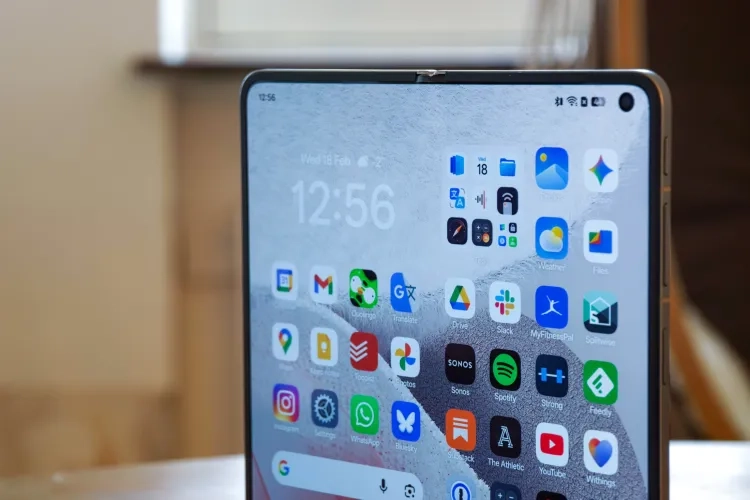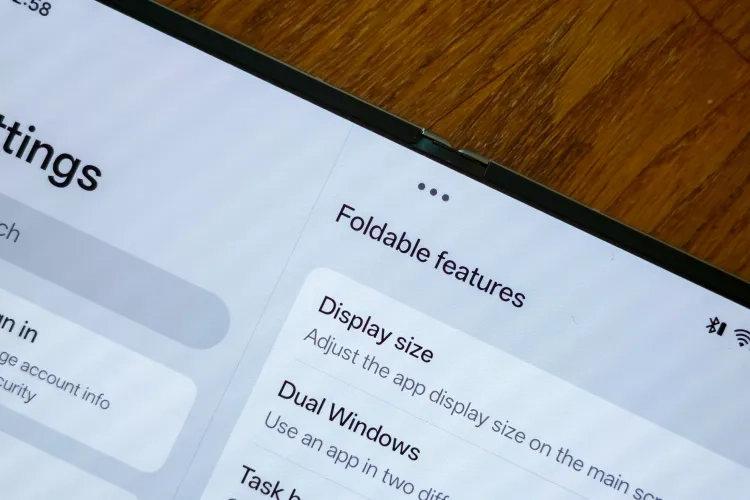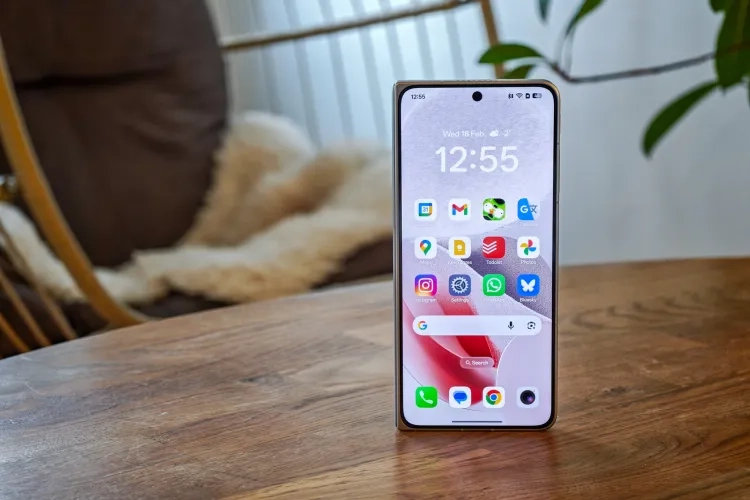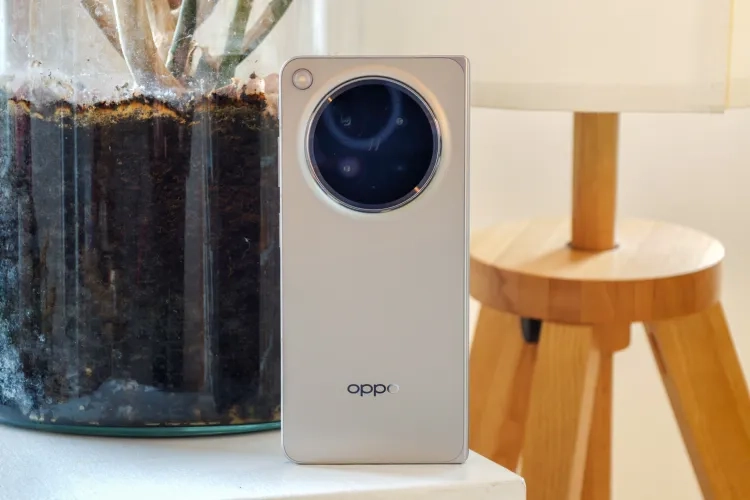
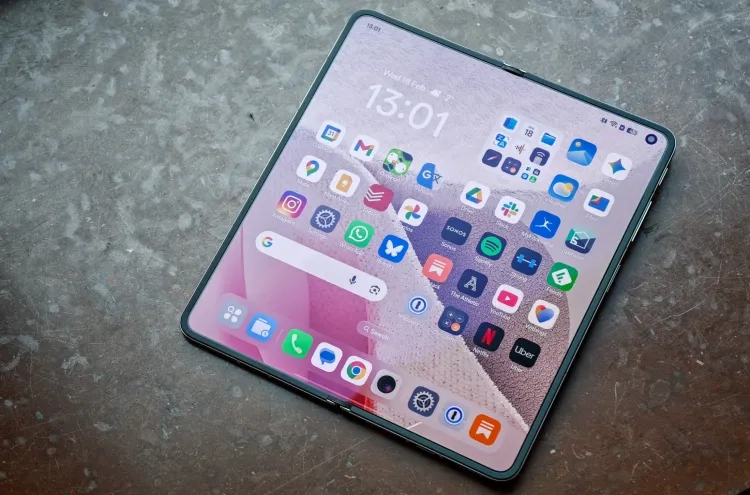
At today’s foldable screen crease-free technology communication conference, OPPO introduced the technology used in the “world’s flattest” foldable screen OPPO Find N6 phone. OPPO stated that the OPPO Find N6 successfully passed the TÜV Rheinland “600,000 consecutive folding tests for long-term flatness” certification, becoming the “world’s flattest foldable phone” after long-term use testing in the TÜV Rheinland laboratory.
The Verge has gotten their hands on the OPPO Find N6 and shared their firsthand experience.
When most people experience a foldable phone, the first thing they seem to do is look for the crease on the screen. But on the OPPO Find N6, they might have to search for it for quite a while.
OPPO claims that the Find N6, to be officially released next week on March 17th, will feature the world’s first “crease-free” foldable screen. Let’s be clear from the outset: “crease-free” is a bit of an exaggeration.
You can indeed feel the crease on this phone, but it’s almost imperceptible, and you only notice it if you’re consciously looking for it. You can also see the crease, but only under the right light and at the right angle, and you have to squint slightly to spot it. This is the least noticeable crease I’ve ever seen on any foldable screen; it’s so faint that I can’t imagine it bothering anyone.
OPPO’s core technology for achieving such a faint crease is quite impressive: 3D liquid printing. The company states that the crease primarily originates from the height difference on the underlying hinge surface, so they addressed the problem by eliminating these height differences. First, a laser scan is used to scan the hinge, identifying areas of surface unevenness. Then, a photosensitive polymer is printed to fill these gaps, and finally, it is cured using ultraviolet light. OPPO claims this process is repeated more than 20 times, ultimately resulting in an average surface height difference of only 0.05 millimeters—thinner than a human hair.
OPPO also claims that the creases on the Find N6 will remain barely noticeable throughout the entire lifespan of the device and will not deepen over time. To achieve this, the phone uses slightly thicker folding glass, resulting in stronger resistance to deformation and better shape recovery. I couldn’t verify this in just a few days—however, OPPO showed me a sample unit that they claimed had been folded 200,000 times, and the creases felt almost identical to the review unit I had just unboxed.
Since the official launch event is still a week away, OPPO is keeping most of the other specifications of the Find N6 under wraps. Currently, it’s only confirmed that it will feature at least one 200-megapixel camera, support a stylus, and have an IP56/IP58/IP59 dust and water resistance rating. The body will also be very slim, with a thickness similar to last year’s lightweight Find N5 and Samsung Galaxy Z Fold 7. In addition to silver, an orange version will also be available.
See photos below: